
Stay Safe This Holiday Season — BJJ Principles Anyone Can Use
Stay Safe This Holiday Season — BJJ Principles Anyone Can Use
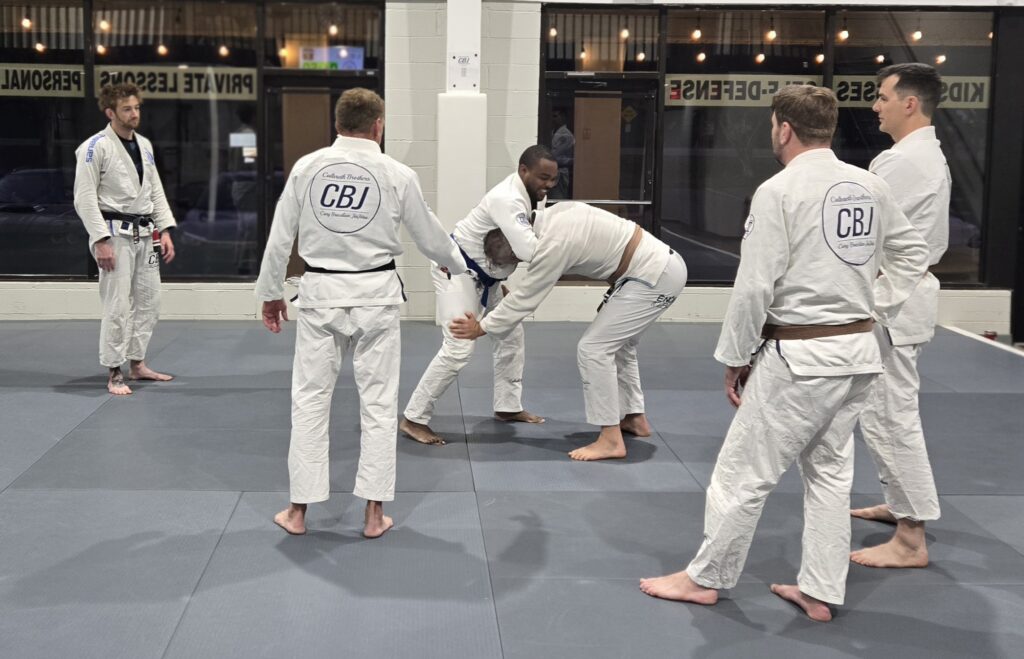
The holidays are supposed to be warm lights, good food, and laughtern, but they also bring crowded parking lots, heavy bags, late-night rideshares, and the kind of distracted moments that can make ordinary people vulnerable. The reassuring news: the same core lessons Brazilian Jiu-Jitsu teaches on the mats (posture, balance, framing, and escape) this is mapped directly to everyday safety. You don’t need a gi or years of training. Small habits and simple, practiced movements make a big difference.
Posture is presence
On the mat, posture is how you create structure; off the mat, it’s how you show presence. Standing tall, keeping your shoulders back, and walking with purpose signals awareness. That doesn’t mean looking aggressive, but instead it means looking like someone who knows where they’re going. A quick posture reset (take a breath, square your shoulders, lift your chin) before walking to your car or through a busy lot makes you less of a target.
Control your base — steady, not stiff
BJJ players lower their center of gravity to stay balanced when pressure comes. In everyday life, a slightly wider, grounded step pattern, especially when holding packages, this gives you stability and recovery options. Carrying items close to your centerline, shortening your stride when it’s crowded, and staying light on your feet are small changes that improve control and confidence.
Frame to create space
A “frame” on the mat uses forearms to keep distance; in the real world, that same idea protects openings. Carry a bag so your forearm covers the zipper or the opening of a tote. Hold a box in the crook of your elbow rather than out on your hand. If someone reaches for your wrist or strap, a quick forearm frame combined with a twist toward the attacker’s thumb (the weak part of a grip) can create enough space to pull away. The goal is always to create space and move to safety and not to escalate.
Situational awareness is practice, not paranoia
Good BJJ players constantly check distance; good pedestrians do the same. When you leave a store do a 10-second scan: note exits, lit areas, and one place you could go if you felt unsafe. This is less about scanning for threats and more about building a mental map. When these checks become habit, they make decisions faster and reduce hesitation.
Words first — use de-escalation
Most problems are solved with words. Speaking calmly and assertively (“Give me space, please,” or “I don’t want trouble”) often ends a situation before it becomes physical. If a person stays aggressive, move toward other people or lighted areas and use your phone to call for help or share your location. De-escalation is a practical skill and it’s part of smart, BJJ-informed safety: avoid fighting when leaving is an option.
Rideshare & short-trip sense
Treat entering a car like taking a position on the mat first check alignment and confirm details first. Verify the license plate and driver name, sit in back if possible, and share the trip with someone you trust. These few seconds of verification are like having a training partner watch your roll so someone else knows where you are.
Train in short, useful chunks
BJJ builds muscle memory through repetition. You can too. Five minutes a day on posture resets, a slow wrist-escape motion, and stepping drills will make reactions start to feel automatic. The Cary BJJ Fundamentals program is designed for exactly this kind of learning: it teaches practical, low-impact self-defense and situational awareness for all ages — no athletic background required. That’s where students learn to turn small, repeatable drills into reliable responses.
Community and common sense
Gyms aren’t just places to learn technique — they’re community. Training with others builds confidence and gives you people who look out for you. Let friends know your plans before a night out, and consider going together when possible. If something feels off, trust that feeling and prioritize getting to a populated place.
If something happens
First, get to safety. Call 911 if there’s immediate danger. Document what you can — photos, witness names, and any identifying details. Report thefts to the police and your bank if cards were involved. Clear, calm actions after the fact make recovery and reporting easier.
The holidays should be about being present with the people you love, not about anxiety over what might happen. By borrowing a few core Brazilian Jiu-Jitsu ideas — posture, base, framing, and repetition — you can move through the season calmer and more prepared. If you want supervised, age-appropriate training that focuses on preventing and avoiding dangerous situations, our Fundamentals program is the place to start. It’s built to help beginners, parents, teens, and older adults learn practical self-defense and everyday awareness in a supportive environment.
Want to learn more? Consider gifting a Fundamentals class this season — it’s the kind of present that builds confidence and keeps people safer year-round.